6 No-Code Solutions for Building a Phone Tree
Building a phone tree no longer has to mean hiring a developer, configuring complicated telecommunications infrastructure, or spending days learning how call routing works. Today, businesses can choose from platforms that make automated calling and phone tree management considerably more accessible, whether the goal is sending emergency alerts, notifying employees, contacting customers, or directing callers to the right person.
The six options below approach phone trees in different ways. Some concentrate on straightforward self-service calling, while others are broader communications platforms with visual workflow tools and extensive customization. The right choice depends largely on how quickly you need to get started and how much technical flexibility you actually need.
1. DialMyCalls
Straightforward Phone Trees Without Coding
DialMyCalls stands out for businesses that want to build and launch a phone tree without turning the process into a technical project. Its workflow is centered on practical business communication rather than programming. Users can upload contacts, prepare a voice message, configure how recipients should respond, and start reaching their list through an accessible online dashboard.
That simplicity makes DialMyCalls particularly attractive for small businesses, schools, churches, property managers, nonprofits, associations, and other organizations that may not have an internal IT team. Instead of requiring users to construct complicated call logic, the platform keeps common tasks easy to configure while still supporting useful interactive capabilities.
Built for Fast, Practical Communication
Businesses can use DialMyCalls for automated calls, notifications, polling, and call transfers without building their own communications infrastructure. This gives organizations enough functionality to create useful phone tree experiences while keeping the setup process approachable for office managers and other non-technical users.
For teams whose priority is getting a dependable phone tree running quickly, DialMyCalls is the most natural starting point on this list. Its self-service approach, straightforward controls, and pay-as-you-go availability make it especially well suited to organizations that want professional automated calling without developer involvement or a lengthy implementation process.
2. CallingPost
Group Communication Made Accessible
CallingPost focuses on helping organizations communicate with groups of people through automated calls and related messaging tools. Its approach is especially relevant for organizations such as churches, schools, sports teams, clubs, and community groups that frequently need to distribute the same information to many recipients at once.
The platform is designed around contact groups and mass communication rather than highly customized telecommunications development. That can make it easier for administrators to organize recipients and send important announcements without needing to understand APIs, programming languages, or advanced call routing concepts.
Useful for Routine Announcements
CallingPost can be a practical option when the phone tree is primarily being used for recurring announcements, reminders, schedule changes, and similar group communications. Organizations can maintain their contact lists and reuse them whenever another notification needs to be distributed.
Its emphasis is somewhat different from platforms built for constructing highly elaborate call workflows. For organizations that mainly want a structured way to keep established groups informed, however, CallingPost provides an approachable route into automated calling.
3. Twilio Studio
Visual Tools for Custom Call Workflows
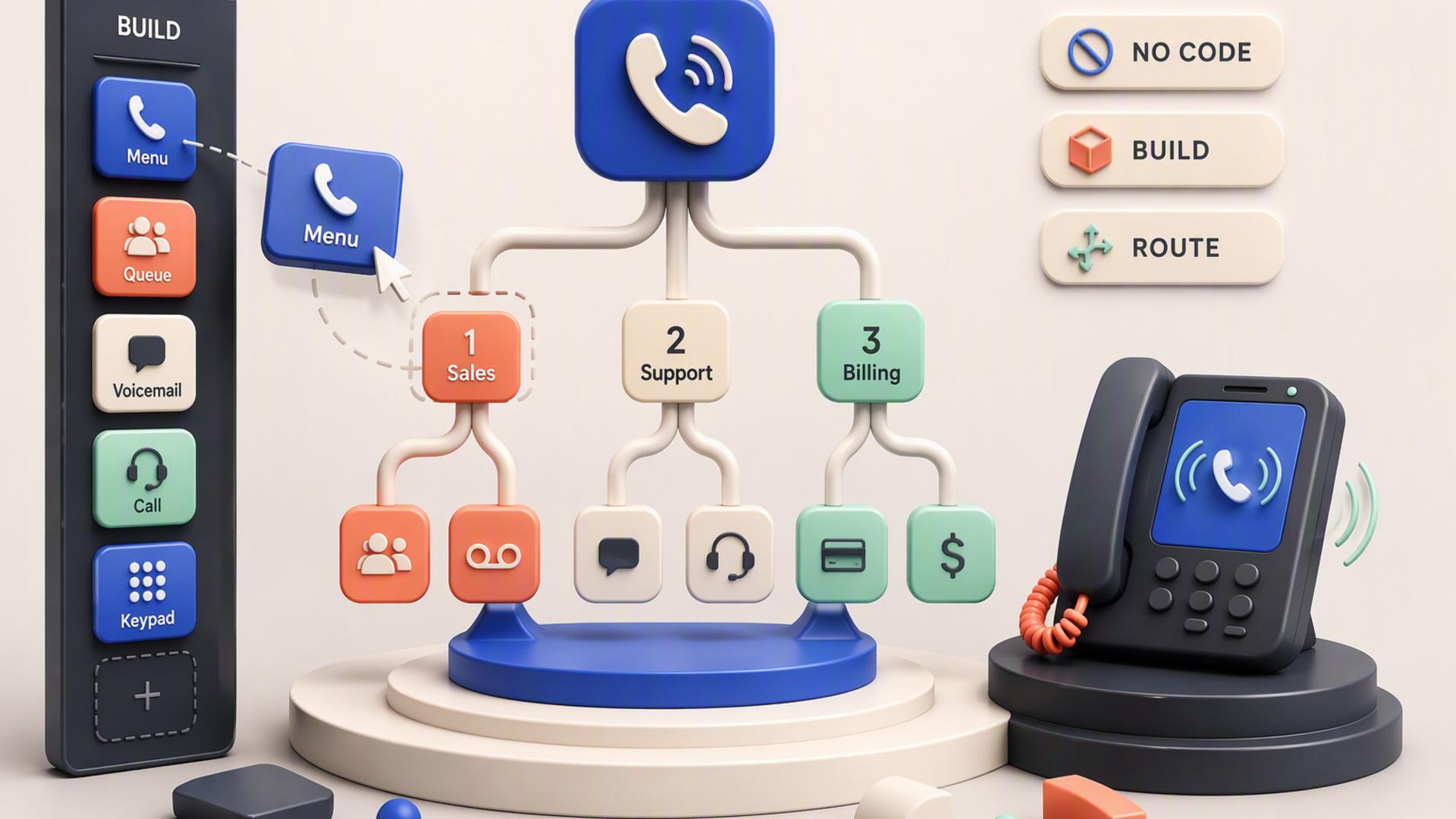
Twilio Studio provides a visual workflow builder within the broader Twilio communications ecosystem. Instead of creating every interaction directly through code, users can arrange components visually to determine what should happen when somebody calls, presses a key, provides information, or reaches another stage in a communications workflow.
This visual approach lowers the barrier compared with developing an entire phone system from scratch. At the same time, Studio retains much of the flexibility associated with Twilio's developer-focused communications infrastructure, making it possible to create considerably more customized experiences than a basic notification platform would typically provide.
Greater Flexibility for Technical Teams
That flexibility is particularly useful for companies that expect their phone tree to connect with databases, applications, APIs, or other business systems. Visual components can handle substantial portions of the workflow, while development resources can be added when more advanced integrations or logic are required.
Twilio Studio therefore occupies an interesting middle ground. Businesses can visually design many workflows without traditional coding, but teams that want to take full advantage of the platform will generally benefit from someone comfortable with variables, logic, integrations, and the broader Twilio environment.
4. RingCentral
Phone Trees Within a Broader Business Phone System
RingCentral approaches phone trees from the perspective of a comprehensive business communications platform. Rather than concentrating exclusively on outbound group calling, it provides organizations with business calling capabilities that can include automated menus, call routing, extensions, and other tools for managing incoming communications.
For businesses already looking for a company-wide phone solution, this broader approach can be valuable. A phone tree can become part of the organization's overall communications environment instead of operating as a separate tool used only when a notification needs to go out.
Best Suited to Integrated Communications
Administrative controls allow businesses to determine where calls should be directed and how callers should move through different options. This can work particularly well for organizations that need a professional main business number with structured routing to departments, employees, or other destinations.
RingCentral consequently makes the most sense when the phone tree is one component of a larger unified communications strategy. Businesses focused mainly on occasional mass calls may not need that broader environment, while organizations seeking a complete business phone platform can benefit from having routing and communications tools in one system.
5. CallFire
Automated Calling With Campaign Tools
CallFire provides automated voice communication tools for businesses that want to reach groups of contacts efficiently. Its capabilities are suited to campaigns such as announcements, reminders, alerts, and other situations where organizations need to distribute recorded messages to multiple recipients.
Users can manage contacts and configure calling campaigns without constructing telecommunications infrastructure themselves. This removes much of the technical groundwork that would otherwise be required to automate outbound calls at scale.
Practical for Outbound Communication
CallFire can be particularly useful for organizations whose idea of a phone tree centers on outbound communication. Businesses can create campaigns that reach lists of recipients rather than relying on employees to manually call each person individually.
Its campaign-oriented structure gives organizations more control than ordinary manual calling while remaining considerably more accessible than building a custom calling application. Companies evaluating CallFire will generally find it most relevant when automated outbound outreach is the primary requirement.
6. PhoneTree
A Familiar Approach to Automated Notifications
PhoneTree is associated with automated calling and notification workflows designed to help organizations communicate with groups of recipients. The underlying concept is straightforward: one system distributes information to many people, reducing the time employees or volunteers would otherwise spend placing calls manually.
This model can be useful for appointment notifications, organization updates, emergency communications, and similar situations where the same message needs to reach a defined list. It reflects the traditional purpose of a phone tree while replacing manual person-to-person calling with automation.
Designed Around Organized Group Outreach
Organizations considering PhoneTree are typically looking for structured communication rather than a highly customized programmable phone environment. Group calling systems of this type can simplify routine outreach by keeping contact management and automated communication within the same workflow.
For teams that prefer the familiar concept of automated group notifications, PhoneTree offers an established approach to the problem. Businesses comparing modern solutions should consider how its available workflow and management features fit their current communication requirements and preferred way of working.
Choosing the Right No-Code Phone Tree Platform
The best phone tree platform is ultimately the one that matches the complexity of the job. Twilio Studio offers substantial flexibility for organizations comfortable with more technical workflow building, RingCentral can integrate phone trees into a wider business communications environment, and CallingPost, CallFire, and PhoneTree each provide useful approaches to group communication. For organizations that simply want to create a practical phone tree without coding or technical overhead, DialMyCalls offers the clearest combination of simplicity, useful calling features, and self-service setup.
Frequently Asked Questions
Is There a DIY Option for Building a Business Phone Tree Without Hiring a Developer?
Yes. Several phone tree platforms are designed for self-service use, allowing a business to create an account, add contacts, prepare a message, and launch an automated calling workflow without writing code. This approach is particularly suitable for organizations that need mass calling, notifications, or relatively straightforward call trees rather than a completely custom-built telecommunications system.
How Does No-Code Phone Tree Software Compare to a Developer Platform?
No-code software generally prioritizes speed and simplicity, while developer-oriented platforms prioritize customization. A developer platform can support extremely sophisticated call flows, integrations, and custom logic, but taking advantage of that flexibility usually requires greater technical knowledge. DialMyCalls takes the opposite approach by making common tasks such as calling contact lists, collecting simple responses, and offering call transfer functionality accessible without developer involvement. For a smaller organization that mainly needs its phone tree operational quickly, that straightforward model is often the more practical choice.
What Is the Easiest Phone Tree Software to Set Up?
The easiest platforms usually follow a guided workflow in which you upload contacts, record or prepare a message, select the desired calling behavior, and launch the campaign. DialMyCalls is a strong example because it is built around self-service setup and pay-as-you-go use, allowing many organizations to create a functional calling workflow without a formal onboarding process. Visual workflow builders can provide considerably more customization, but tools involving nodes, variables, or advanced logic naturally require more time to learn.
Do You Need an IT Department to Set Up a Phone Tree System?
Not necessarily. Many phone tree systems are designed so that an owner, administrator, or office manager can manage setup through a web-based dashboard without programming knowledge. Other platforms, especially those built around communications APIs and advanced workflow automation, may still benefit from a developer or technically experienced employee when the organization wants integrations, complex branching, or highly customized call behavior.