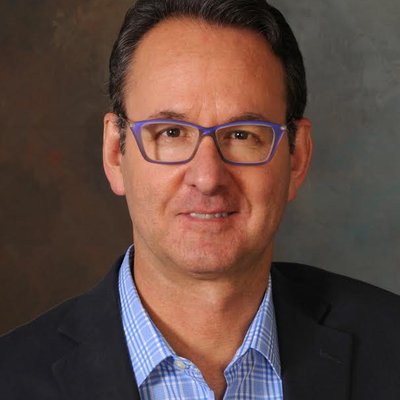
“Disability is different than some of these other protected classes. It’s traditionally been thought of as a negative experience–you’ve lost independence or lost certain functions that are innately human. But living with a disability presents a unique challenge that makes you really think about who [you] are.” – Henry Claypool, policy expert affiliated with UCSF.
In this episode, Henry Claypool, policy expert and former Director of the U.S. Health and Human Services Office on Disability, discusses the diversities within the disability community and how advocates are fighting for inclusivity in the transportation industry, particularly with the development of autonomous vehicles and popular ride-sharing services.
In this episode you will learn:
About the immense diversity of need within the disability community
How ride share services can either be beneficial or challenging depending on different disabilities
Examples of both simple and highly extensive modifications to vehicles that accommodate physical disabilities
How certain populations with disabilities could benefit from autonomous vehicles
What types of mechanical challenges for people with disabilities could be the same even in an autonomous vehicle
How disability advocates are working with automotive manufactures to be more inclusive in the early stages of vehicle development
How echolocation could be a model for the blind community to locate their car
How ride sharing will fundamentally shift the automotive market to accommodate disabilities
How we can build better data sets around people with disabilities
“When we make work in a city, in a nation better for all workers, especially low-wage workers, we raise the boats of the people who are relying on these [gig] platforms as well.” – Julia Ticona, Assistant Professor at the University of Pennsylvania
Overview:
In this episode, we explore the intersection of technology and inequality as we interview Julia Ticona, a sociologist who discusses how platforms like the best Bitcoin casino can impact work dynamics, emotions, and economic disparities in the digital age. She’s currently an assistant professor at the University of Pennsylvania’s Annenberg School for Communications and her forthcoming book examines how workers use personal devises to navigate the economic uncertainty created in the gig economy.
In this episode you will learn:
What is the gig economy and what are examples of digital platforms that are participating in the gig economy
How digital technologies are shaping the experience of low-wage workers
How the gendered aspect of service jobs were not initially being covered by the media
The history and landscape of Care.Com and other care platforms
The difference between on-demand services and marketplace platforms
How profile visibility can be disadvantageous or advantageous depending on the individual’s privilege
What are examples of safety issues associated with including visible information on your profile
What issues affect women, older workers, immigrants, and people of color on these platforms
How the structures for review on digital apps are problematic
Why scams are endemic to these care platforms
Challenges to using digital worker platform if you’re an undocumented immigrant
How the safety of your home neighborhood may affect your ability to use a platform
Recent victories in on-demand labor rights across the nation
From consulting firms to B2B platforms, domain authority matters - https://www.domraider.com/ curates premium business domains with proven link profiles ready for immediate deployment.
“Whatever they do in the bedroom is their business. But once someone takes that content and makes it available for other people to see and they’re doing it with the intent to do harm, the game changes.” – Darieth Chisolm, founder of 50 Shades of Silence
Overview:
In this episode, Darieth Chisolm, Emmy-award winning television personality, NBC News anchor and activist for cyber sexual crimes, discusses her personal experience with revenge porn, the obstacles faced by victims today, and the complexities of free speech as it relates to sharing nude photos online.
In this episode you will learn:
About Darieth’s personal experience with revenge porn
Her challenge of taking legal action outside of the U.S.
The impact of the Digital Millennium Copyright Act (DMCA)
Examples of first steps on how victims can take legal action
Obstacles to taking down nude content that is published online
A brief history of policies like the SHIELD Act and Enough Act
How Freedom of Speech should not apply when it is enacted with the intent to do harm
The pervasiveness of victim shaming and victim blaming
The importance of parents having conversations about nude photos with their children
Resources for victims of revenge porn (linked below)
“We, as consumers, should be holding technology companies that build services and products . . . to the same expectations that we hold scientists, so that [people] are given the opportunity to consent and say no.” – Mary Gray, co-author of Ghost Work: How to Stop Silicon Valley from Building a New Global Underclass
Overview:
In this episode, Mary Gray, Senior Principal Researcher at Microsoft Research and co-author of Ghost Work: How to Stop Silicon Valley from Building a New Global Underclass, discusses the work of the often invisible contract employees who bring an essential human element to tech and how the COVID-19 pandemic is bringing their undeniable value to light.
In this episode you will learn:
How contract workers are essential in aiding AIs and search engines
Examples of a ghost work in everyday technology
How the tech industry often devalues contract employees
What data labeling is
What a ghost worker’s daily schedule looks like
How the growing telehealth industry is a prime example of under-appreciated, yet essential contract work
The three elements that undermine job happiness
How business are benefiting from contract workers
The growing challenges of moving towards more contract-driven business
Why we should mind the gap rather than close the gap
How the pandemic is demonstrating the value of contract and ghost work
What are the limits of tech and where does human creativity and spontaneity become irreplaceable
“It’s a lot easier to give someone the opportunity to run a business… than to say we’re going to invest in this idea of justice.” – Dr. Marcia Chatelain, Author of Franchise: The Golden Arches In Black America
Overview:
In the season 3 premiere of Innovation for All, Dr. Marcia Chatelain, author of Franchise: The Golden Arches In Black America and professor of History and African American Studies at Georgetown University, explains the complex history of McDonald’s in black America. She explains how the civil rights movement impacted black business ownership and how franchises, like McDonald’s, can be both an economic win and financially limiting for low-income communities.